
Home › Knights News › Training
TrainingHow to tackle in rugby safely: technique, tackle height and drills
From July 2026, a lower tackle height is full law in community rugby worldwide. Here is how a safe, effective tackle works, step by step, what the new law means for your club, and the drills that build a tackler who goes low every time.
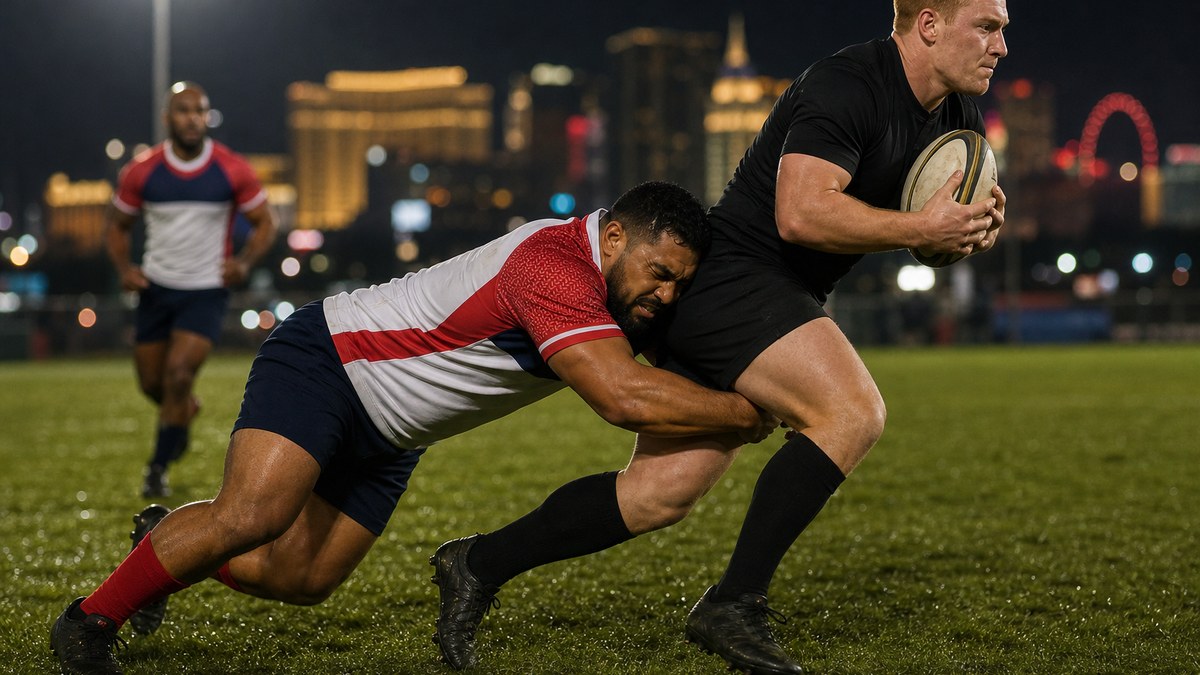
Key facts at a glance
- New law: on 17 June 2026 the World Rugby Council voted a lower tackle height into full law for community rugby, effective for seasons starting after 1 July 2026
- The line: competitions choose either the waist or the base of the sternum; elite rugby keeps the shoulder line for now
- The evidence: trials ran for two years across 10 unions, with more than 150,000 tackles studied (World Rugby)
- Scotland study (2025): head-on-head contact fell 45% after the lower tackle height trial was introduced
- Why technique matters: World Rugby says 76% of head injuries happen in the tackle, two-thirds of them to the tackler
- Body shape: a tackle made bent at the waist is 4.5 times safer than an upright, face-to-face tackle (World Rugby, 2021)
Every defensive system in rugby ends the same way: one player, one ball carrier, one tackle. In our first guide we broke down rugby defense systems: blitz, drift and line speed. This one goes to the moment that holds any system together. If you want to know how to tackle in rugby safely, the good news is that the safest tackle and the most effective tackle are now very close to the same thing: low, head to the side, arms wrapped, legs driving.
At the Vegas Knights, defense is our identity. "Defend the Shield" is not a slogan about big hits. It is about tackles that are repeatable for 40 minutes, legal under the laws, and safe for both players. This guide covers the technique, the 2026 tackle height law, common mistakes and a drill progression you can take to training. It is general information, not a substitute for coaching: contact skills should always be learned under a qualified coach.
What changed in the rugby tackle law in 2026?
On 17 June 2026, at its meeting in Dublin, the World Rugby Council approved a lower tackle height for community rugby and took it into full law. World Rugby said the change applies to seasons that begin after 1 July 2026. It follows two years of trials across 10 national member unions, in which more than 150,000 tackles were studied. According to World Rugby, the trials showed that a lower tackle height reduced upright tackles, which it describes as the most likely cause of avoidable head impacts.
The approved law wording, published on World Rugby Passport, sets a "sanction line" for the tackle. In elite rugby it stays at the shoulder line. In community rugby, match organizers choose either the base of the sternum or the waist. Tackling above the relevant line in open field play is dangerous tackling, and the tackler must also tackle below it under the tackle law, with a penalty as the sanction. Low-speed pick-and-go actions and players dipping to score close to a ruck or maul are treated differently from open field play.
The same wording gives competitions optional extras: a ball carrier in open play must not significantly lower their height before making dangerous contact, and some competitions may ban double tackles in open play. Where two players tackle at once, the primary tackler must meet the sanction line and any other tacklers must be no higher than the shoulder line.
World Rugby is also starting elite trials: the Junior World Championship in Georgia began trialing a lower tackle height from 27 June 2026.
What is the legal tackle height in the US?
USA Rugby adopted World Rugby's opt-in global law variation on tackle height from 1 September 2024, the start of the 2024–25 membership year, for USA Rugby-sanctioned community competitions. Its trial wording deemed it dangerous to tackle, or try to tackle, an opponent above the base of the sternum, with pick-and-drive situations around the ruck and maul excluded. USA Rugby said the aim was to reduce head-to-head and head-to-shoulder contact.
With the new World Rugby law in place for seasons after 1 July 2026, the exact line (sternum or waist) is set by the competition. Always check your own competition's current laws before you play. The APR Games 2027 rules will be confirmed with player registration.
| Level | Maximum legal tackle height | Source and date |
|---|---|---|
| Elite / professional rugby | Shoulder line (elite trial of a lower height at the 2026 Junior World Championship) | World Rugby, 17 June 2026 |
| Community rugby worldwide | Base of the sternum or the waist, chosen by the competition | World Rugby law wording, approved 17 June 2026, live 1 July 2026 |
| USA Rugby community competitions | Base of the sternum (global law variation) | USA Rugby, from 1 September 2024 |
| Mini / youth rugby (example) | Below the waist, no ripping the ball in the tackle | Connacht Rugby mini rugby guidance |
| Pick-and-go near ruck or maul | Treated differently from open field play | World Rugby law wording note |
Do not coach to the line, coach under it. If your target is the shorts or the thighs, a tackle that rides up a little is still legal. If your target is the chest, every small error becomes a penalty, a card or a head contact. Aim low, finish low.
Why does tackle technique matter so much?
When World Rugby launched its Tackle Ready program in September 2021, it said 76% of head injuries happen during the tackle and that two-thirds of those injuries are to the tackler, not the ball carrier. It also said a tackle made bent at the waist is 4.5 times safer than an upright, face-to-face tackle. In other words, the tackler's own body shape is the biggest safety factor they control.
The research on the law change points the same way. A University of Edinburgh study published in April 2025 in BMJ Open Sport and Exercise Medicine analyzed 18,702 tackles from 60 men's community matches in Scotland, comparing the season before the lower tackle height trial with the first trial season. Head-on-head contact fell by 45%, head-to-shoulder contact fell by 29%, and tacklers were 22% more likely to tackle bent at the waist. Sanctions for high tackles tripled while players adjusted, and the researchers found no significant rise in head contact with the ball carrier's hips or knees.
The lesson for any player: lower, bent-at-the-waist tackles change outcomes. The lesson for any coach: players need time and repetition to change, and penalties rise while they learn.
How do you make a safe tackle, step by step?
World Rugby's Tackle Ready framework breaks the tackle into five stages: tracking, preparation, connection, acceleration and finish. Coaching resources from World Rugby Passport, Sportplan and the Irish provinces use very similar cues. Here is how they fit together for a front-on tackle.
1. Tracking: close the space and watch the hips
Move toward the ball carrier under control, staying slightly inside them so they cannot cut back. Watch their hips, not the ball, their hands or their eyes. Coaches use the line "where the hips go, the body follows". Shorten your steps as you close in so you can react to a sidestep.
2. Preparation: get low before contact
This is where most high tackles are decided. Height is set in the approach, not at the moment of contact. Feet about shoulder-width apart, knees bent, hips sinking, back flat, chest over your front knee and head up with your eyes on the target. A tackler who is still upright two strides out will almost always tackle high.
3. Connection: shoulder in, head to the side
Make contact with your shoulder on the target area, below the sternum: the midriff, the shorts or the thighs. Your head goes to the side of the ball carrier's body, never in front of it. Coaches call this "cheek to cheek": your cheek close to their hip or backside, face turned away from the line of impact, neck in a strong, neutral position. Getting the head on the wrong side, in front of the carrier's knees or hips, is one of the main ways tacklers get hurt.
4. Acceleration: wrap and drive
Wrap both arms around the ball carrier's legs and squeeze, a cue often called the "ring of steel". At the same moment, drive with short, powerful steps. A shoulder hit without arms is not a tackle: it relies on collision, is less likely to stop the carrier and is not legal technique. Arms plus leg drive is what actually brings players down.
5. Finish: land on top, then roll away
Keep the squeeze as you go to ground, aim to land on top of the ball carrier, then release and get back to your feet. In rugby union the tackler must release the tackled player and roll away before playing the ball. Getting up quickly is what turns one tackle into a defensive line that is ready for the next phase.
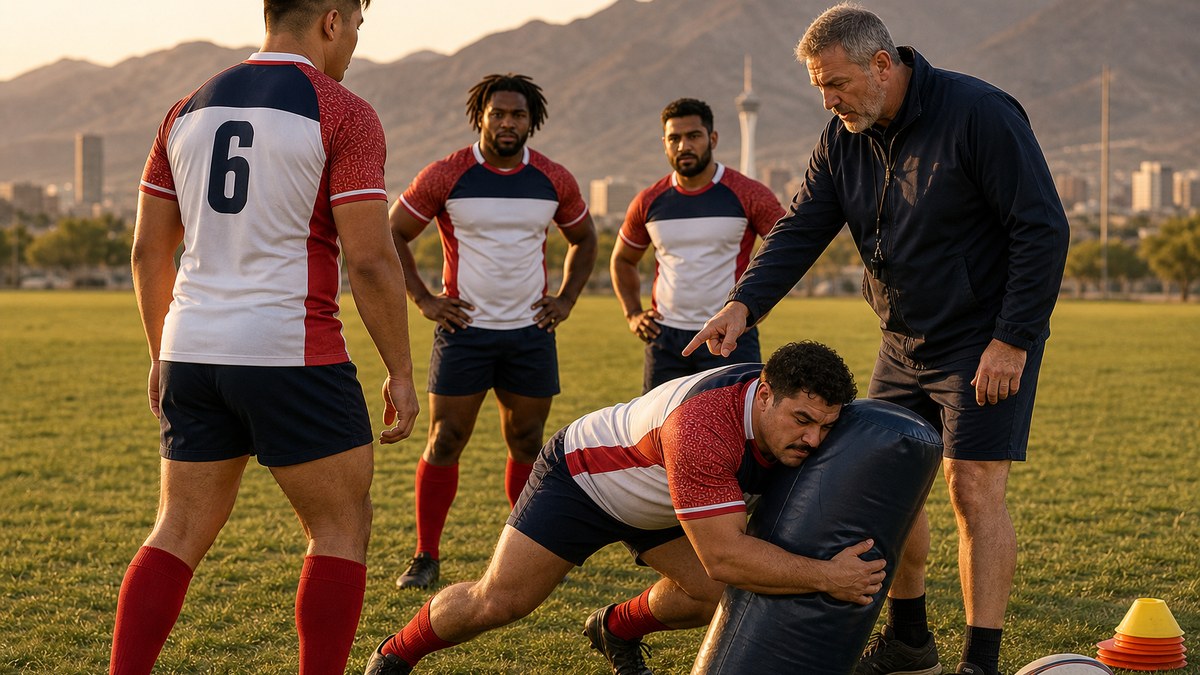
Safety note: tackling and all contact skills should be learned and practiced under a qualified coach, starting at walking pace and building up gradually. If any player shows signs of a possible concussion, follow "recognise and remove": take them out of play and follow your union's concussion protocol. This article is not medical advice.
What are the different types of tackle?
World Rugby's Tackle Ready resources group one-player tackles into front-on, side-on and from behind, plus multi-player tackles. The principles stay the same; the target and head position change.
- Front-on tackle: shoulder into the midriff or thighs, head to the side, wrap and drive. It needs the best footwork because the ball carrier is running straight at you.
- Side-on tackle: the most common tackle in a drift defense. Lead with the near shoulder into the thigh, head behind the ball carrier's backside, wrap and squeeze the legs together.
- Tackle from behind: aim low, wrap the legs, slide your arms down and let the carrier's momentum take them to ground. Your head goes to the side of their legs.
- Two-player (double) tackle: the first tackler goes low; under the 2026 law wording any other tackler must be no higher than the shoulder line, and some competitions ban double tackles in open play.
What are the most common tackling mistakes?
| Mistake | What it causes | The fix |
|---|---|---|
| Arriving upright | High tackles, penalties and head contact | Sink the hips over the last three strides; chest over the front knee |
| Head in front of the ball carrier | The tackler's head takes the impact | "Cheek to cheek": head to the side, behind the carrier's hip |
| Watching the ball or hands | Getting stepped, or arriving at the wrong height | Eyes on the hips and the target area |
| Shoulder-only hit, no arms | Missed and illegal tackles | "Ring of steel": wrap and squeeze every repetition |
| Flying in from too far | Off-balance, high or missed tackles | Shorten the steps and close the space under control |
| Technique fading late in games | Upright tackles when tired | Practice tackle technique at the end of conditioning work |
Most bad tackles are fitness problems disguised as technique problems. A player who is gassed stands up. That is why the Knights train the tackle at the end of sessions, not just the start: the shield has to hold in the last minute too.
How do ball carriers stay safe in the tackle?
Safety in the tackle is shared. Under the 2026 law wording, the ball carrier must enter the tackle safely, and competitions can add a clause that a ball carrier in open play must not significantly lower their height before making dangerous contact with a tackler. USA Rugby's 2024 guidance also noted that a ball carrier's height is not directly penalized unless they act dangerously, for example by leading with the head, but that referees consider it when they sanction a high tackle.
For ball carriers, the basics are: carry with good posture, keep your chin off your chest and your neck strong, never lead with the crown of your head, and learn to fall and land safely. World Rugby Passport's "Contact Confident" resources include mobility, falling and landing, neck strengthening and head reaction exercises for exactly this reason.
Tackling drills: a safe progression for your club
Coaching resources consistently recommend building tackle technique in stages: static shape, walk-through, controlled contact at about half pace, then full live tackling. Here is a progression we like, based on those stages. Run it under a qualified coach, with players paired by size and experience.
- Shape and posture (5 minutes). No contact. Players hold the low "ready" position, then step into a lunge with the chest over the front knee and the head up. The coach checks backs are flat and heads are up.
- Walking tackle on a bag (10 minutes). Walk in, sink, place the shoulder, head to the side, wrap the bag, drive two short steps. Swap shoulders every rep so both sides are trained.
- Kneeling or crouch tackle (10 minutes). From the knees or a low crouch, players tackle a partner who walks past holding a shield, focusing on head placement and the ring of steel. Low speed, controlled landing.
- Tracking channel (10 minutes). In a narrow channel, the ball carrier jogs and the defender tracks, closes and gets into position, finishing with a two-handed touch at the target area. Footwork and height, no collision.
- Controlled 1v1 at half pace (10 minutes). Same channel, now with a tackle onto a shield or into a full tackle at controlled speed, building up only when technique holds.
- Tired tackles (5 minutes). After a conditioning block, repeat the walking or shield tackle. The goal is the same low shape when breathing hard.
For one rugby skill broken down every week, join American Pro Rugby's free newsletter, The Breakdown, and follow APR's Tuesday Skills series on americanprorugby.com. Coaches can also look out for the APR coaching clinic, May 28–31, 2027, in Las Vegas.
How do you build strength and confidence for tackling?
Good technique still needs a body that can hold it. Legs and hips that can sink and drive, a strong trunk and a strong neck all help a player stay in a safe shape at contact. Our sister club the Vegas Lions has detailed guides to strength training for rugby and plyometrics for rugby, both worth reading alongside this one.
Confidence matters too. Many new players are nervous about contact, and nerves make people stand up. Touch and non-contact formats are a great way to learn footwork, tracking and reading a ball carrier before you tackle anyone: see Downtown Rugby's guide to touch rugby. Players coming from rugby league will recognize much of this technique, but the union tackle has its own laws around the ruck; the Vegas Kings explain the codes in rugby union vs rugby league.
A quick word on fuel and recovery: eat and sleep like an athlete, and get advice on nutrition from a qualified professional. Our APR partner Clann13 makes supplements for athletes; as with any product, check with a professional what is right for you.
How does tackling change in tens rugby?
Tens rugby is played with fewer players on a full-size pitch, so each defender covers more grass and a missed tackle is more likely to become a try. Tracking and footwork matter even more, because ball carriers have more space to step. Tackle completion and getting back up quickly are what keep a tens defense alive.
The APR Games 2027 is 10-a-side rugby, two 20-minute halves, Memorial Day weekend, May 29–31, 2027, in Las Vegas. The Vegas Knights are one of the five founding franchises, alongside the Vegas Kings, the Vegas Blackjacks, Downtown Rugby and the Vegas Lions, plus one invitational team still to be revealed. Meet them all on the APR teams page. Full rules and squad sizes will be confirmed with player registration.
Defend the shield in Las Vegas
The APR Games 2027: Men's Elite ($10,000 prize pool), Women's Social ($5,000) and Youth divisions. Player entry is $299 and includes a team jersey, a full kit bag, at least three pool games and opening-night access.
Join the APR Games waitlistWhy tackling is the heart of the Knights Code
The Knights Code is Honor, Valor, Victory and Unity, and all four show up in the tackle. Honor is tackling legally, under the line, when a high shot might look bigger. Valor is going low on a bigger ball carrier. Unity is trusting the player beside you to make their tackle so you can make yours. Victory comes from making them all, for the full game.
Want to look the part at training? Team gear is on the APR merch store. And if you are traveling to Las Vegas for the Games, our partner Luna Appleton covers where to stay, eat and celebrate.
The new tackle law is not the end of physical rugby. Low tackles still stop ball carriers, win turnovers and win games. The teams that adapt first, by drilling a low, head-to-the-side tackle until it is automatic, will be the ones with the strongest shield.
Frequently asked questions
What is the legal tackle height in rugby now?
In community rugby, World Rugby made a lower tackle height full law for seasons starting after 1 July 2026. Competitions choose either the base of the sternum or the waist. Elite rugby still uses the shoulder line. Check your own competition's current laws.
When does the new tackle height law start?
The World Rugby Council approved it on 17 June 2026, and it applies to community seasons that begin after 1 July 2026.
What is the tackle height in USA Rugby?
USA Rugby adopted World Rugby's tackle height variation from 1 September 2024 for sanctioned community competitions, making tackles above the base of the sternum dangerous tackling. Check USA Rugby and your competition for the current wording.
Where should your head go in a rugby tackle?
To the side of the ball carrier's body, never in front of it. Coaches call it cheek to cheek: your cheek close to their hip, face turned away from the impact and neck strong and neutral.
Where should you aim when tackling?
Below the chest: the midriff, the shorts or the thighs. Many coaches pick one low target such as the shorts so that a small error still leaves the tackle legal.
Why is a low tackle safer?
World Rugby says a tackle made bent at the waist is 4.5 times safer than an upright tackle, and a Scottish study found head-on-head contact fell 45% after a lower tackle height was introduced.
What is the ring of steel in rugby?
It is a coaching cue for the arms in the tackle: wrap both arms around the ball carrier's legs, lock them and squeeze so the carrier cannot step out.
How should beginners learn to tackle?
Under a qualified coach, in stages: body shape first, then walking tackles on bags, kneeling tackles, tracking without contact, then controlled tackles at half pace before any full contact.
Can the ball carrier be penalized in a high tackle?
Ball carriers must enter the tackle safely, and some competitions penalize a ball carrier who significantly lowers their height before making dangerous contact. Referees also consider the carrier's height when sanctioning a high tackle.
Is tackling different in tens rugby?
The technique is the same, but each defender covers more space, so tracking, footwork and tackle completion matter even more. The APR Games 2027 is played as 10-a-side rugby.
Keep reading
Sources
- World Rugby: World Rugby lowers legal tackle height in community rugby, 17 June 2026
- World Rugby Passport: Community tackle height law wordings approved, June 2026
- World Rugby: Tackle technique set to be revolutionised as World Rugby launches Tackle Ready, 14 September 2021
- World Rugby Passport: Tackle Ready and the lower tackle height law trial
- USA Rugby: USA Rugby to implement World Rugby global law variation on tackle height, 10 April 2024
- University of Edinburgh: Rugby tackle height change boosting player safety, 8 April 2025
- Rugby Canada: World Rugby recommendation on tackle height, December 2025
- Sportplan: Tackling technique, safety and effectiveness (2025)
- Connacht Rugby: Tackle intro (coaching resource)
- American Pro Rugby: APR Games 2027
This guide is general information, not individual coaching or medical advice. Contact skills should be learned under a qualified coach, and tackle height laws vary by competition and change over time; check your competition's current laws before you play. Written October 2026.